
Whitbeck Notes
Fall 2026
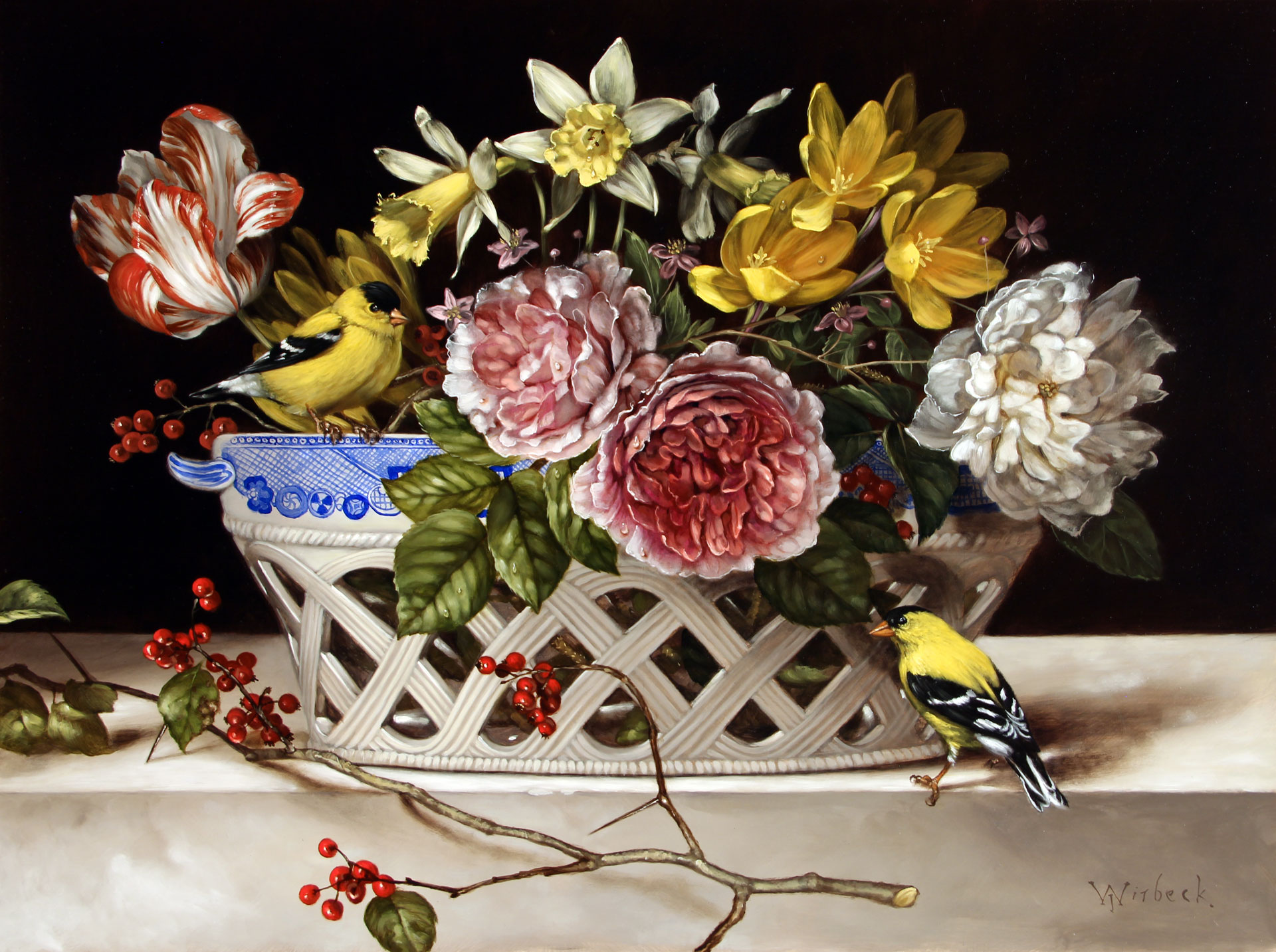
Finches Floral
18" x 24" oil on panel
"James Whitbeck 2012 I bought this book at the Midtown Scholar
in Harrisburg, Pa. right after our art show there, intrigued by the
Spanish still life paintings from the early seventeenth century. Who
knows what inspirational road this will take me down!"
This was the inscription that I had wrote inside the cover of William B. Jordans great book titled, Juan van der Hamen Y Leon and the Court of Madrid. At that time, all those years ago, I was (and still am) very influenced by the still life painters of Flanders and the Netherlands in the 17th century, like Pieter Claesz (my favorite), Willem Kalf, Wilem Claesz. Heda, Clara Peeters and others. I was briefly brought into the orbit of Spanish still life, previous to the purchase of this book, through the more well known paintings of Juan Sanchez Cotan. Some might be acquainted with his distinctive works like the one of a cut open melon and cucumber on a stone ledge with cabbage and quince hanging above from strings.
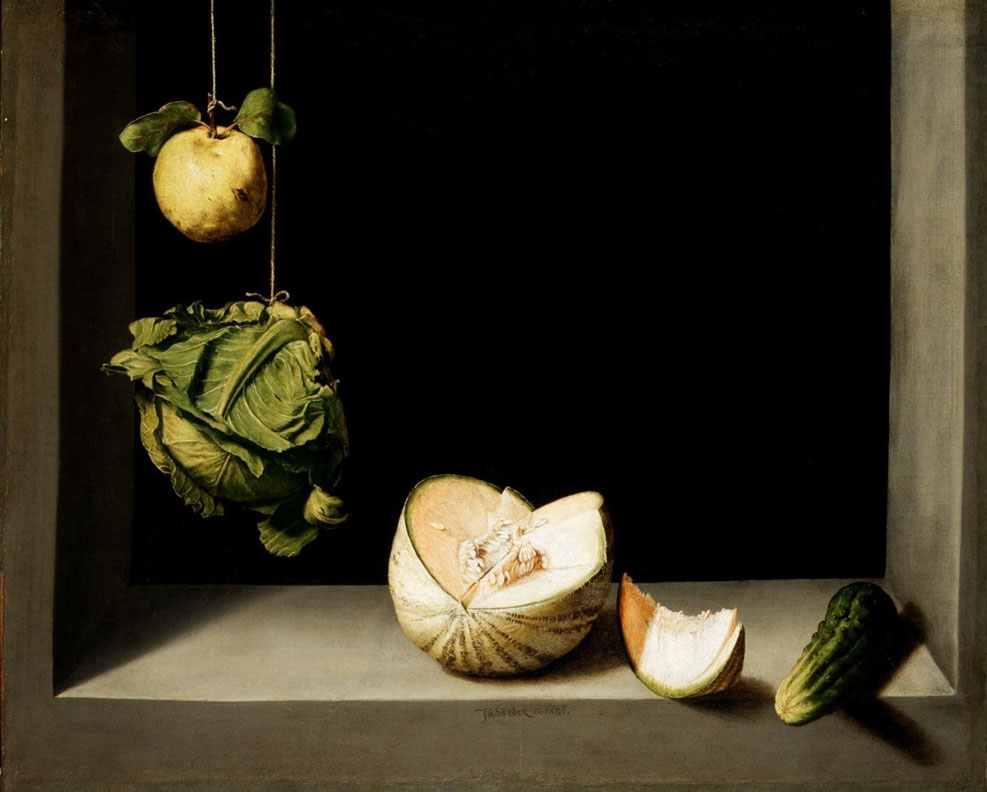
Juan Sanchez Cotan, 1602
Sanchez Cotan had made that fascinating detail of veggies and fruit hanging from strings in stone niches famous. It was Juan van der Hamen Y Leon who had carried that on, keeping the tradition going in the 1620's, seeing the publics need for elegant still life of fruit, wine, confectionaries and elegant bowls all set in stone architecture and dark backgrounds. And I loved it!
You can also definitely see van der Hamen's influence from his low country brethren. Osias Beert the Elder, Clara Peeters and Frans Snyders were his contemporaries at the time. Osias Beert's paintings of sugared candies in Chinese bowls with the fashionable facon de Venis glassware holding white or red wine in the background, or Clara Peeter's stacked plates of wheel's of cheese and Chinese wan-li bowls full of almonds and various treats, they all had their influence on a young Juan van der Hamen. Frans Snyders was well known for his large paintings of what are typically called game pieces. Deer, rabbits, game birds, vegetables of all sorts, fruit and fish from the sea, all spread out haphazardly on tables, gutted, cleaned and washed, ready for preparation. Usually there would be a dog sniffing about, or a maid, sleeves rolled up and apron on, skewering a small chicken. Household servant's would be seen at various tasks throughout the kitchen. But one of Frans' other subject matters that became well known, especially to Juan, was that of his paintings showing an abundance of fruit in Chinese bowls that would have a few songbirds flying about, picking at the fruit. Very lively! This was especially influential to Juan in his early paintings of the 1620's. And you can see where he carried this subject on, making it available to the Spanish nobles and middle class of the Iberian Peninsula.
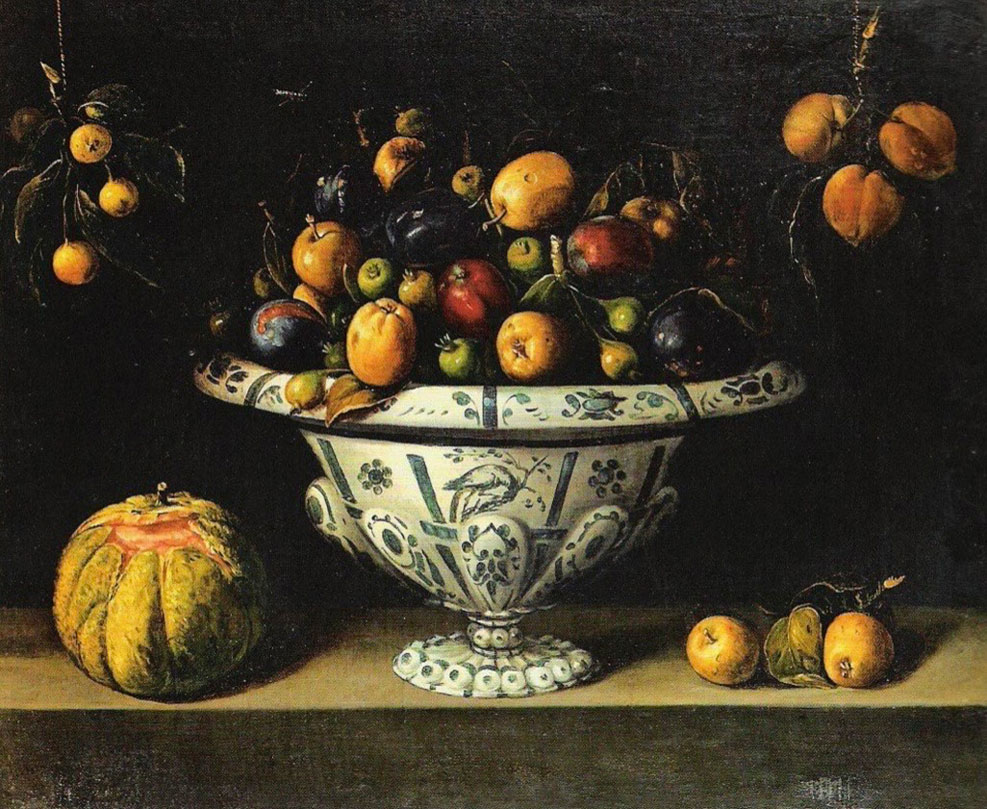
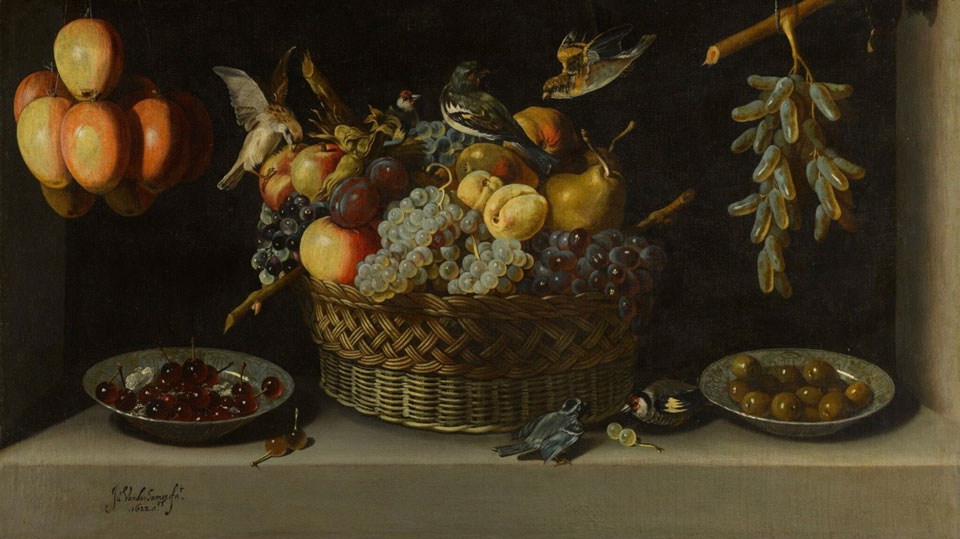
Juan van der Hamen Y Leon-1622
Juan van der Hamen Y Leon-1621
Some of you might have been wondering at his name, Juan van der Hamen Y Leon. Clearly Juan and Y Leon are Spanish. But the van der Hamen? Turns out that our man here is a wonderful mixture of the two. Juan's forefathers had been living in the northern Netherlands for generations, at a time when it was under Spanish rule through royal marriage, and generally termed The Spanish Netherlands. His father, Jehan, had been part of what was called the Guardia De Los Archeros, basically elite status, ceremonial palace protectors. And Jehan had found favor within the court of Philip II. Moving to Valladolid in Spain at a young age, Juan would then have had his feet in both vibrant cultures and access to the great painters of both regions. The Dutch Revolt over Spanish rule at the end of the 16th century did not stop the van der Hamen Y Leon's from staying in the newly formed Dutch Republic. There is still the van der Hamen ancestral home in Vleuten, Utrecht where they had dwelled and flourished for many generations. So Juan would have had a wonderful intermingling of these two cultures, having spoke both Dutch and Spanish and having been influenced artistically by both. Clearly evident by his style of painting.
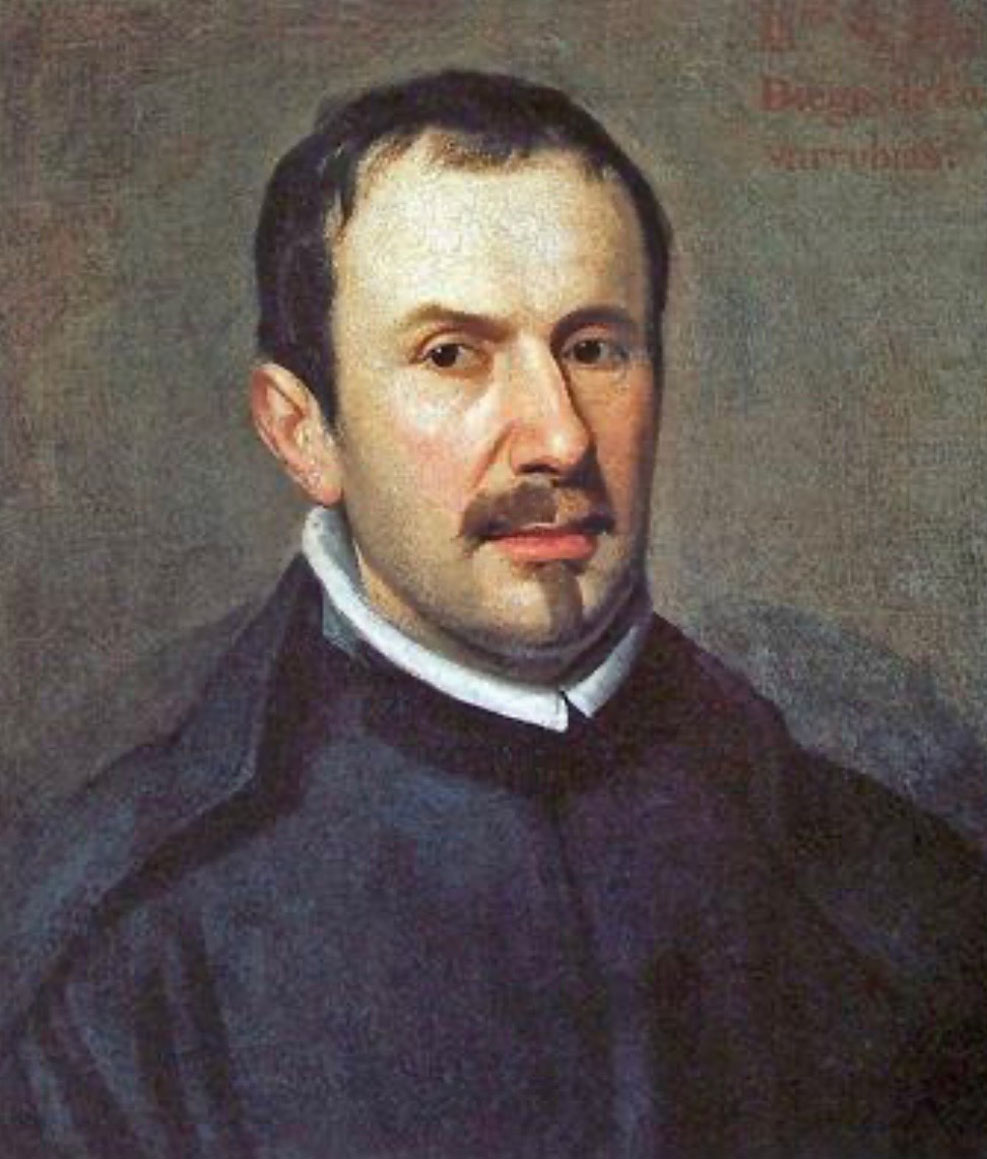
Juan Van der Hamen Y Leon
painted by his brother, Lorenzo in 1620
His Success was instant. At the age of only 23, Juan received a royal commission to do a still life of fruit and game, un lenso de frutus y casa, to be hung at the hinting lodge of Philip III. And it was to accompany a set of five other still life pieces that had been painted a decade earlier by non-other then Juan Sanchez Cotan, of the hanging vegetables fame. So he was well on his way from the get go. And a good thing too, because he lived only to the far too young age of thirty-five. What a powerhouse of talent and influence from a very short-lived life.
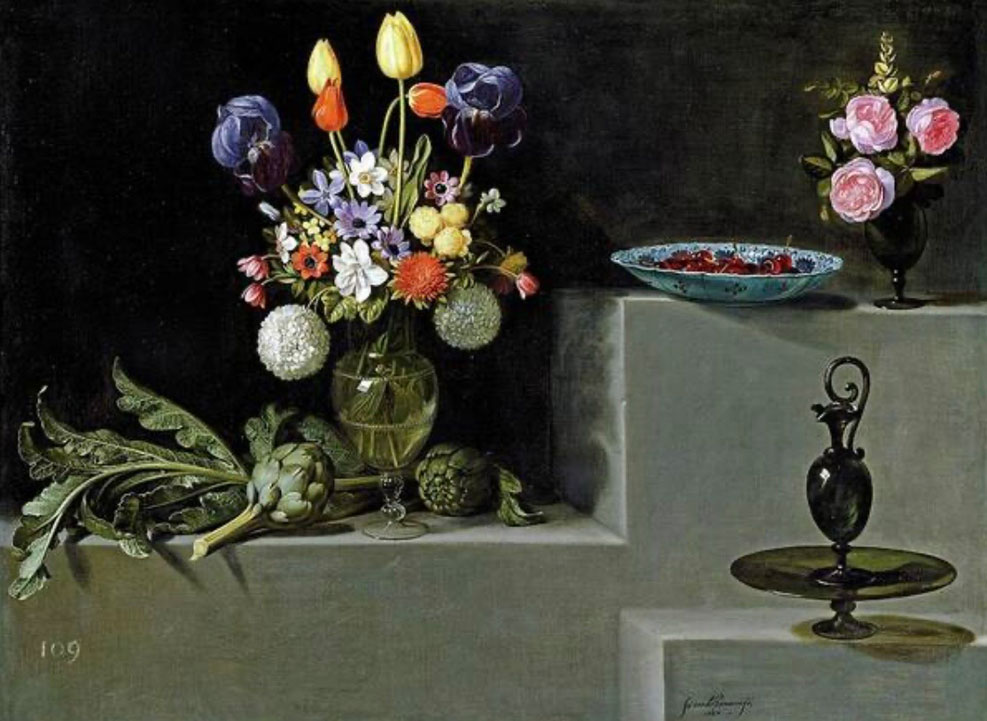
Juan van der Hamen Y Leon-1627
Near the end of his career Juan had started producing these amazing, large stillife-within-stillife pieces. There were bouquets of flowers, trays of fruit, baskets of fruit, clay vessels, glassware, vegetables, all set in one exquisitely laid out space. The way he was able to keep all of this abundance in control was his use of a series of stepped stone shelves, like might be found in stone architecture at a palace or royal courtyard. Moving away from the single table-top, Juan had created (real or of artistic license) these great stages at various heights and of differing lengths, allowing him to separate, in a way, his grand still lives into manty separate ones. Genius!
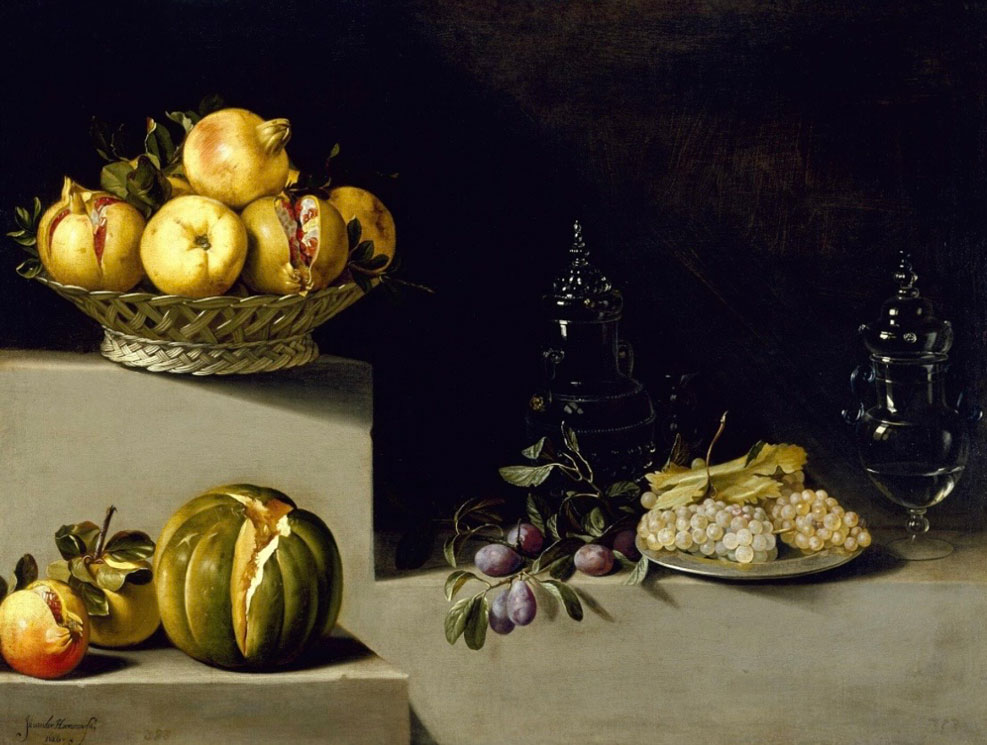
Juan van der Hamen Y Leon-1626
Anyone who had done the math at the beginning of these Notes would have come up with fourteen years. This book on Juan van der Hamen Y Leon had been purchased at the Midtown Scholar bookstore in Harrisburg, Pennsylvania fourteen years ago in 2012. I had all intentions of diving right in and living the world of Juan van der Hamen and all that he had to offer. But as life has a way of doing, life happens! And it was recently that I finally pulled out this large, coffee table sized book and began the process of taking in it's influence. Also, years ago I had built two floor to ceiling book cases on opposite walls of our living room, and one could see where a book shelved away one day might become forgotten and not reemerge till years later!
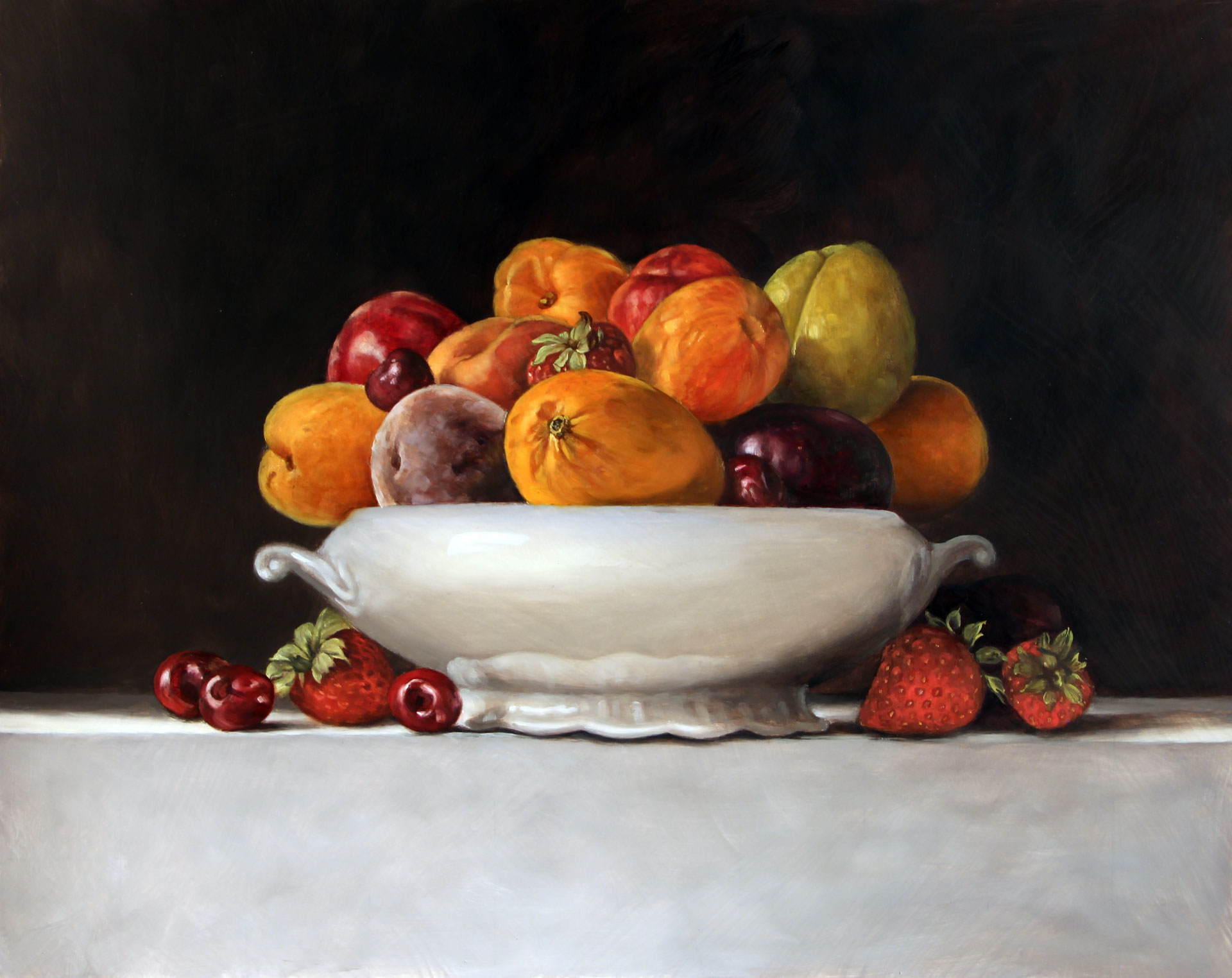
James Whitbeck- yet to be finished fruit still life with birds (eventually)
And resulting from all of this I have recently begun a wonderful new panel (pictured above). An oriental white and blue bowl, reminiscent of the Delft Blue, filled with fruit of various kinds spilling out onto the table-top; plums, apricots, strawberries, cherries, peaches and some I don't even recall their names. And perched, as well as in flight will be some songbirds, filling out the space around. An influenced piece for sure. Thank you Juan van der Hamen Y Leon!
James Whitbeck
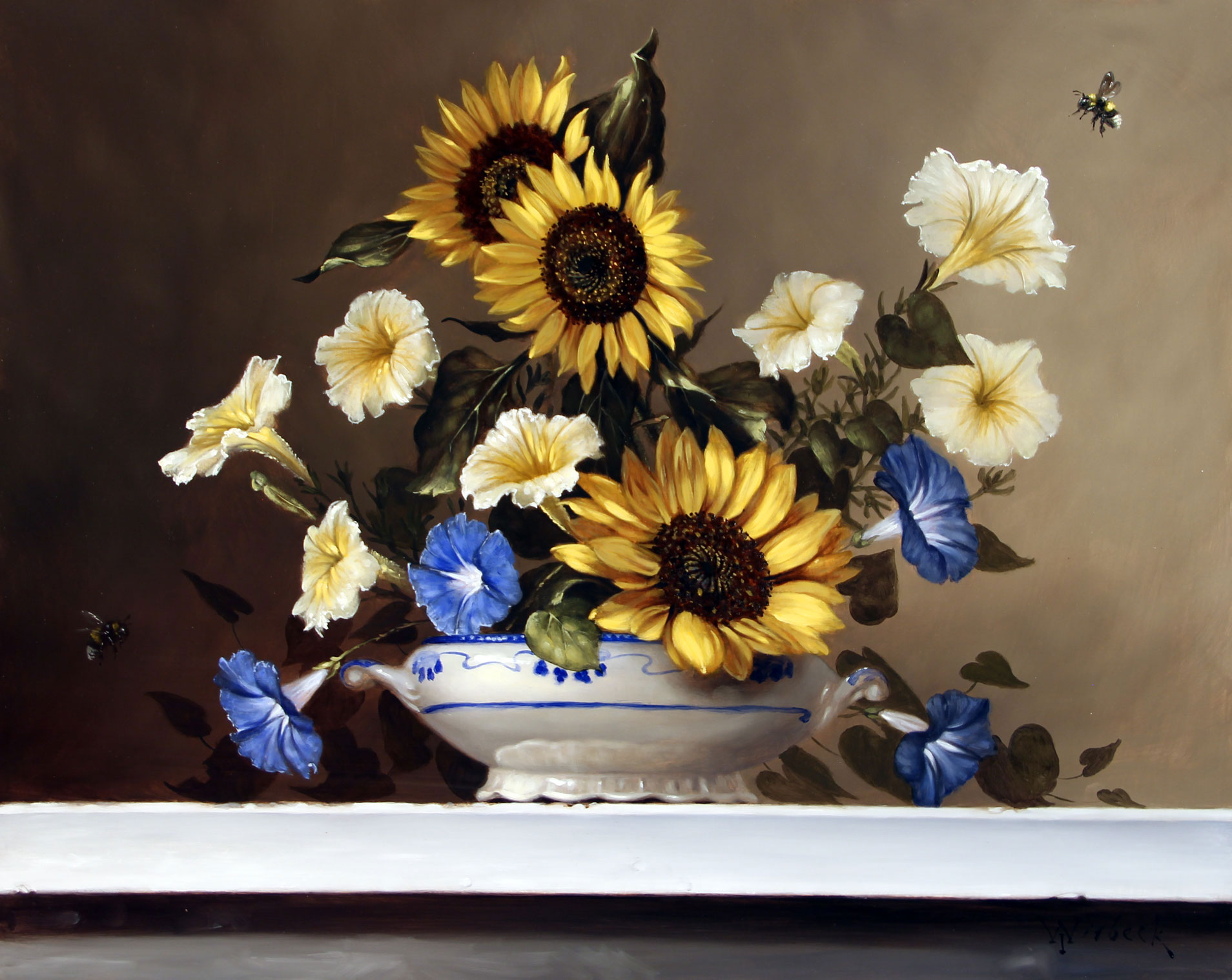
Yellow Delight
16" x 20" oil on panel
Better Late then never! Here are the Fall 2026 Whitbeck Notes as promised. Sometimes it takes a bit for me to actually sit down and get to it. And so that's just what I did! I sat down with my note pad and just started writing. I hope they were interesting enough for you to get all the way to the end. I was thinking that a little insight into why I paint what I paint would be of some interest. A little behind the scenes information. Thank you all for your patience!
Three September show's are coming up soon, one right after the other. It all starts off this Labor Day weekend in Lancaster, Pennsylvania with the longs park Art Festival, followed by the Bethesda Row Art Festival in Bethesda, Maryland. And the final show of 2026 will be one that I have not done for years, and that is the fall Rittenhouse Square Fine Art Show in Philadelphia, Pennsylvania. You can click here to access my ART SHOW'S page of my website for more information. You can also click here to visit my website and view all available paintings as well as learning a bit about my technique and how I create my artwork.
All my best!
James Whitbeck
(413) 695-3937
