
Whitbeck Notes
Winter 2025/ 26
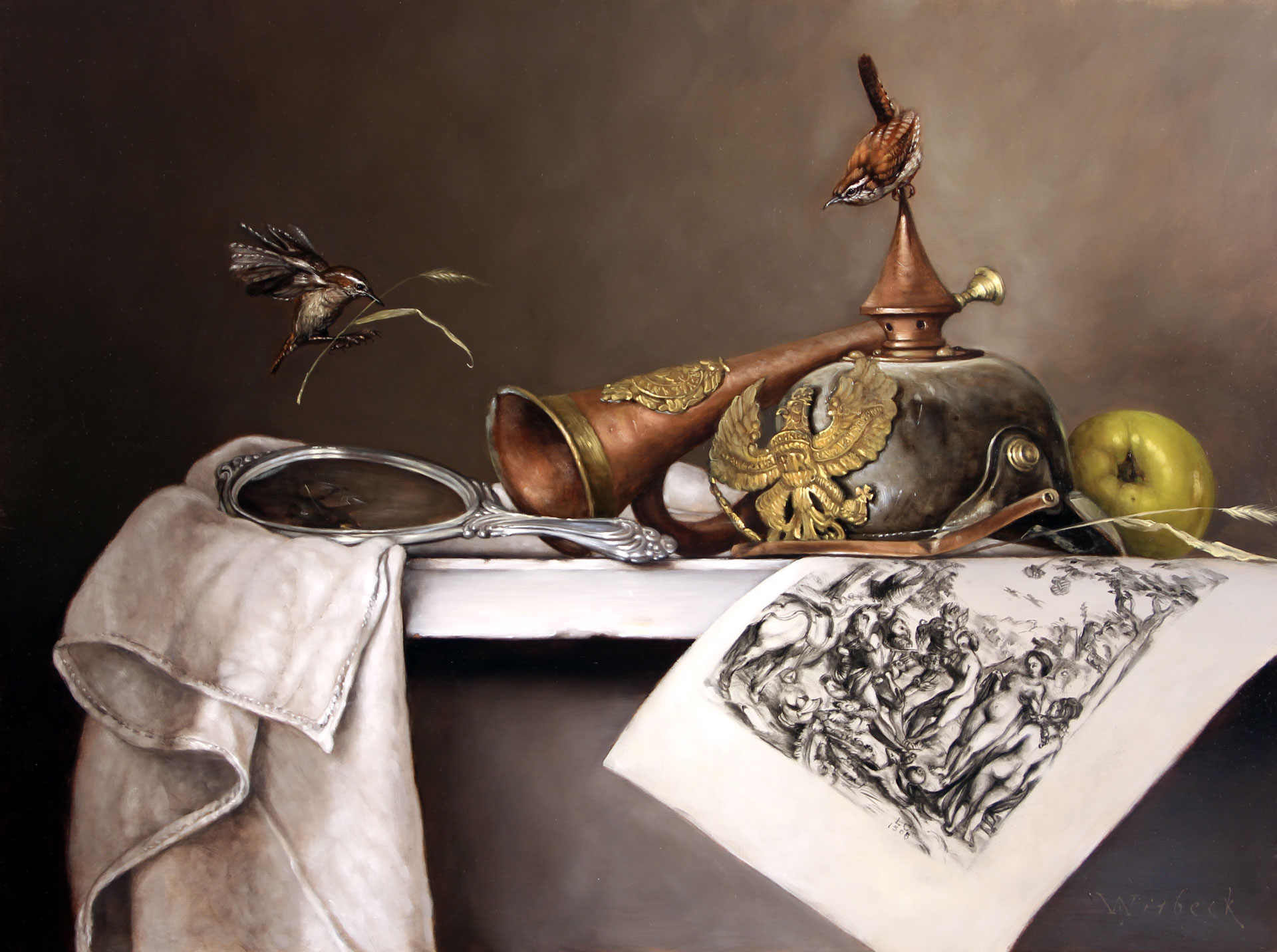
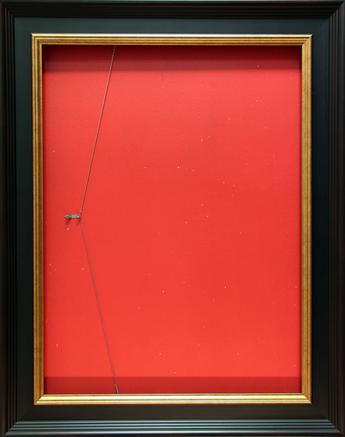
The Golden Apple
18" x 24" oil on panel
The world of 16th and 17th century painters is wide and varied. Everyone knows the names of Vermeer and Rembrandt, Rubens and Hals, but there are so many more out there, the lesser known painters with great skills and who also had innovative ideas, pushing their craft in new directions. Over the years I have happily come to discover these little known talents. Like stepping stones these artists have lead me from one to another, digging deeper into a less travelled road from which they are usually mentioned as an aside or a footnote to the more well known. It feels as if each one was opening a door and inviting me in to explore and discover for myself another inspiring oeuvre and another artists trials and tribulations.
During the art show season I often hear, "You must be inspired by Vermeer" or "Rembrandt must be your guy! I can see the influence." And as that is very true, especially with Vermeer, for me they were just the tip of the iceberg.
It was Vermeer who I first started copying all of those years ago. Officer and Laughing Girl, A Woman Asleep, Girl Reading a Letter at an Open Window and The Little Street were all part of my original wave of inspiration. Without really knowing the technique, but full of enthusiasm, I made replicas correct in size to the original and as best as I could in look and feel. It took me years to get to where I am now, and I am still learning, and those were the first brush strokes to start it all off.
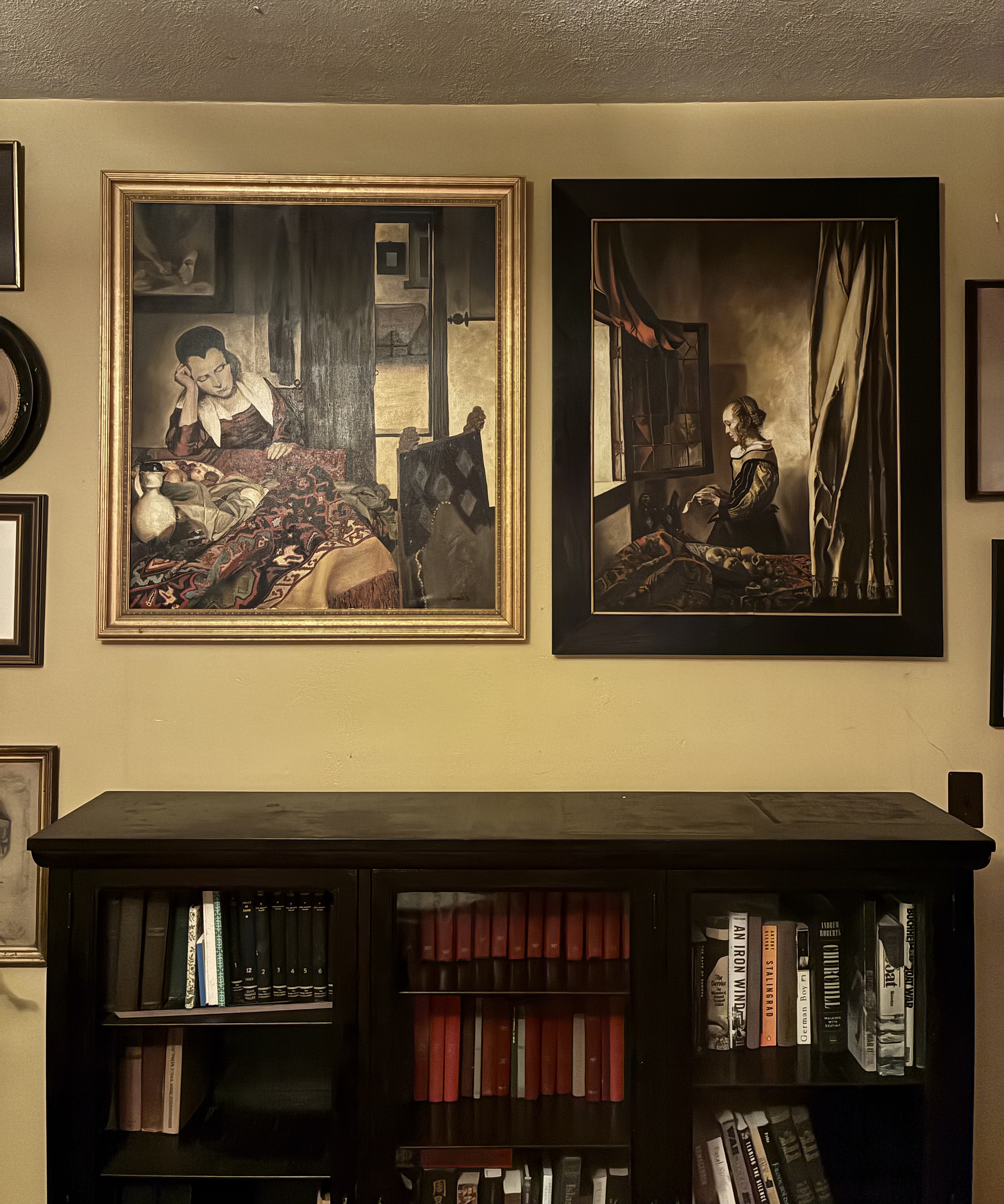
My reproductions of Vermeers "A Woman Asleep" and Girl Reading a Letter at an Open Window"
One of my absolute favorite painters from that period is Pieter de Hooch (pronounced de Hoke). De Hooch was a contemporary of Vermeers and it was through reading about Vermeer that his name quickly came up in association with the master of Delft. He seemed to have had a better feel and execution for the architectural elements of his paintings then did Vermeer, in my opinion. Perhaps this was because his father was a brick layer (metselaer) by trade and maybe Pieter had been influenced by his fathers world and what surrounded him as a youth. I mean look at just a few of his paintings and you will quickly see the dominance of brick and stone in his work: Figures Drinking in a Courtyard; Courtyard with Lady and Serving Maid; A courtyard in Delft with a Woman and Child are ones that come to mind. He clearly had an intimate knowledge of brick laying and the feel for how they interlock together. For anyone who has ever worked with brick you can almost hear the distinctive dull clank as one brick makes contact with another.
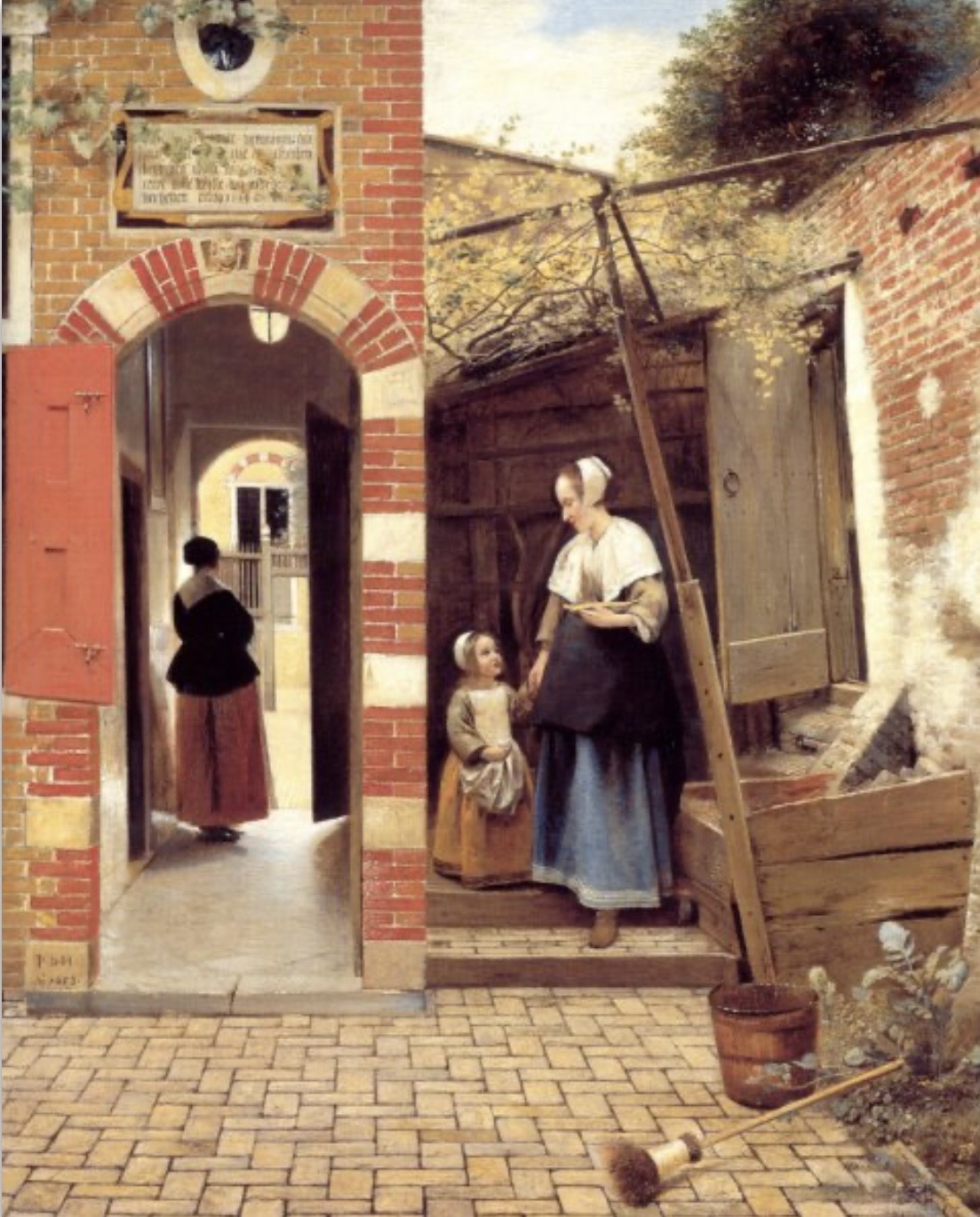
"A Courtyard in Delft with a Woman and Child" by Pieter de Hooch
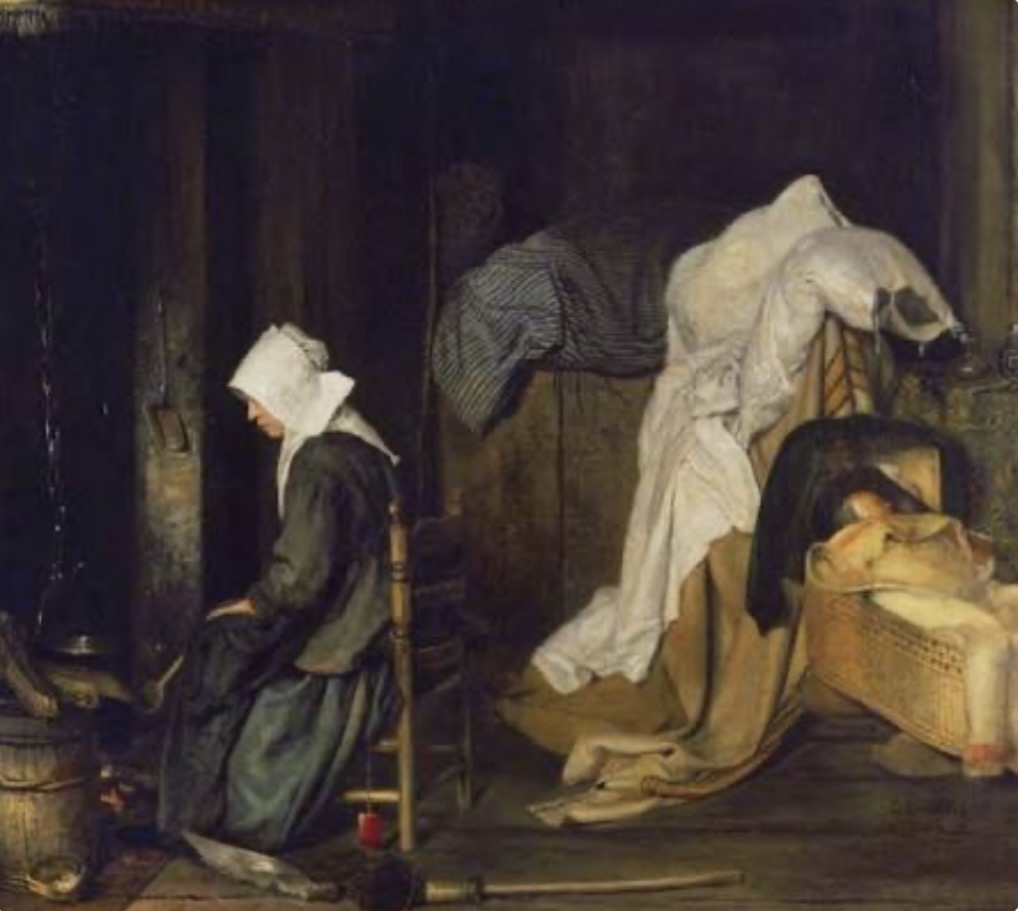
Moving deeper into the fascinating
world of Dutch painters it was Esaias
Boursse who next came into my orbit of
influence, a painter active in the mid 17th
century. It was his Interior with Woman
Cooking that first caught my attention. The
melancholy feel of the scene was very
moving. Amidst a cluttered living space a
woman sits in profile before a cooking fire,
spoon in hand, her back to a cradle holding
a sleeping baby. It is a very quiet piece and I
feel there is much going on in there, not
actively but passively. His interiors with
women at work convey a certain mood so
artfully done and I recommend looking
Boursse up to see more of his work.
And now moving a bit away from the Dutch field of painters and heading south, across the Alps, we enter Italy and the world of Caravaggio. Michelangelo Merisi da Caravaggio to use his full name. Who could not admire his new manner of painting (some church officials as it turns out). The everyday laborer transformed into a Saint Paul, dirty feet and all, or a woman of ill repute now becoming a Judith in his amazing Judith Beheading Holofernes of 1599. The dramatic contrasts of dark and light and the strong placement of his figures seems comparable to staging a scene in a play, the light and shadow creates movement and action that captivated much of Europe. And Caravaggio influenced a whole new group of young, upcoming artists, including many in the Netherlands, mainly a group from Utrecht called the Caravaggisti. Just as an aside, I recommend the book on Caravaggio by Andrew Graham Dixon titled: Caravaggio: A Life Sacred and Profane.
But one branch that I had decided to follow while reading about Caravaggio, one that I had found captivating keeping me in the south for some time was that of the Gentileschi's. Oratzio Gentileschi was a contemporary and friend of Caravaggio and was influenced by his naturalism. He became well known in his own right and was able to obtain many commissions from the royalty, the church and nobles alike and ended his life in England as a court painter to Charles the First of England. And as I continued on in my reading it was Oratzio's daughter, Artemisia that intrigued me even more, or maybe really enhanced the story I should say. On seeing her work I had to agree with others that it seemed as if the daughter had outshone the father. There are a number of books written about Artemisia as her life was something of a struggle. I have read and do recommend: Artemisia by Alexandra Lapierre. It paints a good picture of what life was like for a female painter in early 17th century Italy.
"Interior with Woman Cooking" by Esaias Boursse
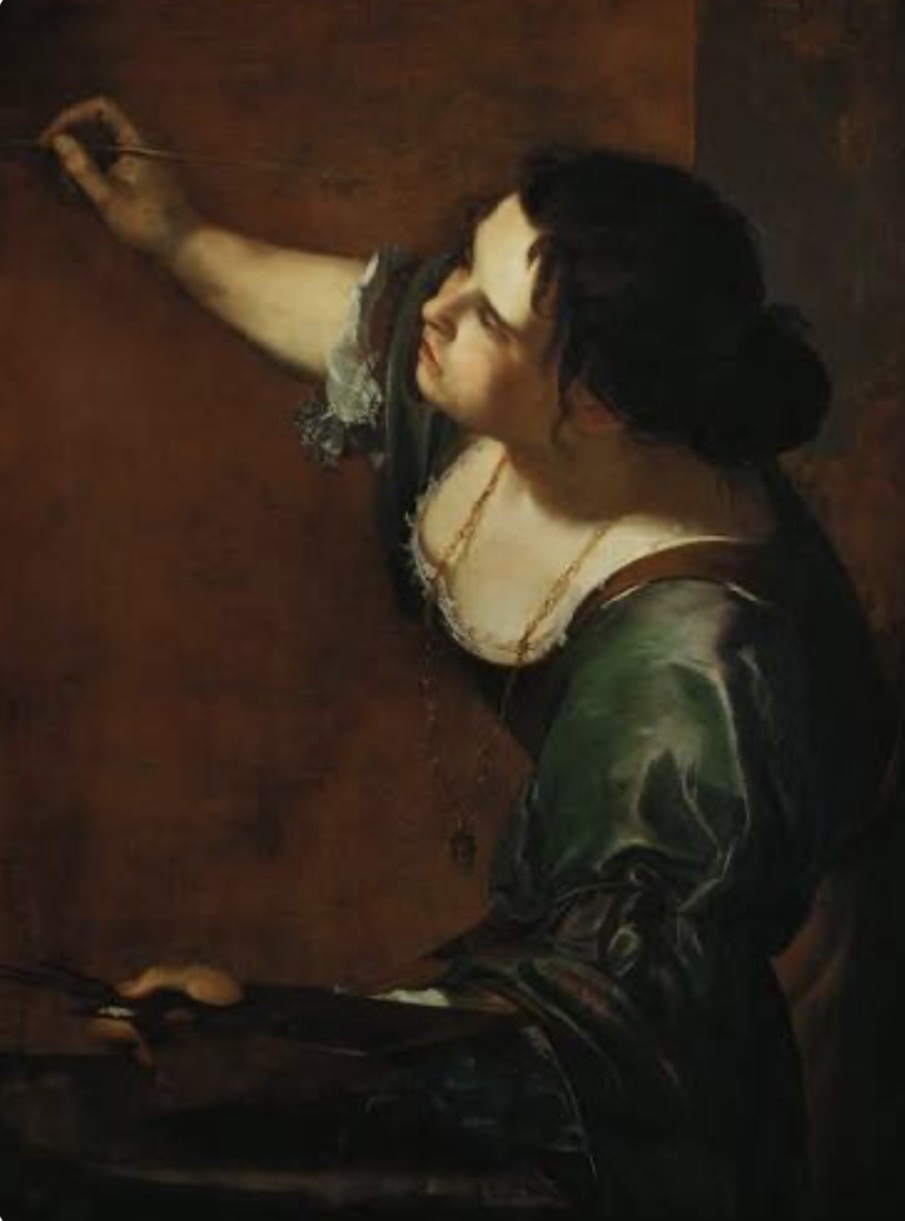
"Self Portrait"
by Artemisia Gentileschi
And, of course, you have Rembrandt. The name that comes to most lips when Dutch Masters is mentioned. And as much as a fan I am of him, his work and technique held the least inspiration for me in what and how I wanted to paint. That lively, textured brushwork just did not do it and my focus was put more onto Vermeer and his circle. But what I can say of Rembrandt that did highly influence me was that of one of his pupils, Gerrit Dou.
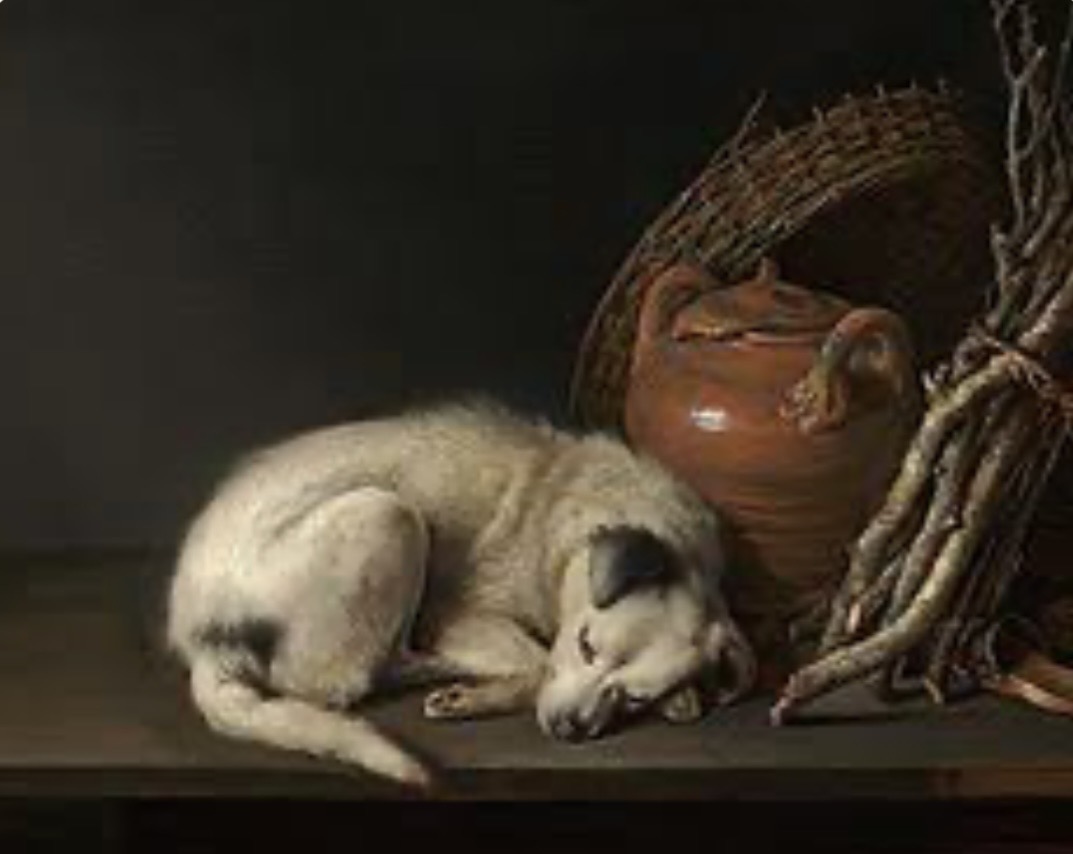
"Sleeping Dog"
6 1/2" x 8 1/2"
by Gerrit Dou
The Fall 2023 Whitbeck Notes goes into some depth of Dou and my connection to him and I recommend reading that to get the full picture. But for these Notes I will keep to Dou and his inspiration for me. Coming out of Rembrandts studio one would think that his work would have shown some of the great masters guidance, and it did to a degree: Artist in His Studio and Old Woman Reading, two of Dou's earlier works definitely show Rembrandt's influence. But not so much in technique. You can for sure get a feel for the new direction that Dou was heading. So subject yes, manner of painting no. And it does not take long before you see him become his own person, working on his pieces with a more refined, miniaturist-like quality. It was Dou who started the movement later to be called the Leiden Fine Painters (de Leidse Fijnschilders), a group of artists who focused more on small panel paintings full of detail and minute brushwork.
As Dou did have some larger pieces, most were of the smaller dimensions; Self Portrait 4 7/8"x3 1/4"; Man Interrupted at His Writing 9 1/2"x8 7/8"; Violin Player 12 1/2"x 8".
Dou was definitely not an obscure name in the world of Netherlandish painters, as a mater of fact all of the artists I have mentioned here are quite well known, they are not the first to usually come up when researching 16th or 17th century European painters though. And you could go even further, like an archaeological dig, unearthing a myriad of talents buried and hidden in the detritus of centuries of dust.
It has seemed to me from time to time that the popularity and exaltation of a certain artist or a certain painting has been the result of the right time, the right place, plus the marketing rants of certain pontificating "experts". Subject matter, technique and style come in and out of popularity depending on the mood of the people, burying artists in a vault, waiting for that someone to rediscover them and make them the genius that they were not when alive. So fascinating.
I am not an expert, but I know what looks good (to me) and what does not. Sometimes when visiting a museum I wonder, "How did that painting get its own room? I have seen better pieces for sure."
For those interested in 16th and 17th century painters I highly recommend taking the time and effort to explore this world thoroughly and unearth the many lesser known artists and their amazing works and lives. Its a fascinating adventure and I have been enjoying it for many years now, all the way back to those first tentative brushstrokes on Vermeers A Woman Asleep.
______________________________________________________________________
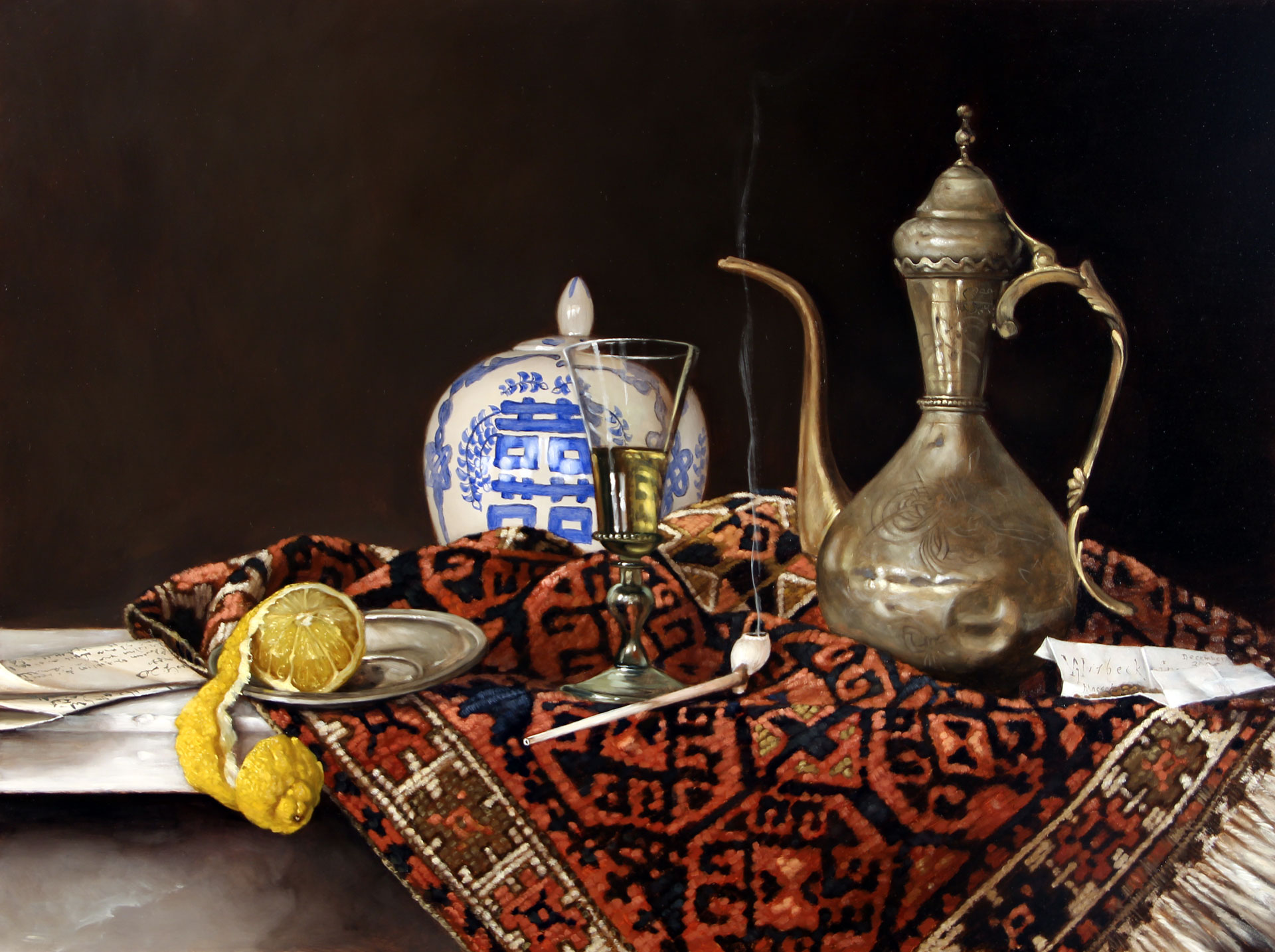
Baluch with Chinese Vase
18" x 24" oil on panel
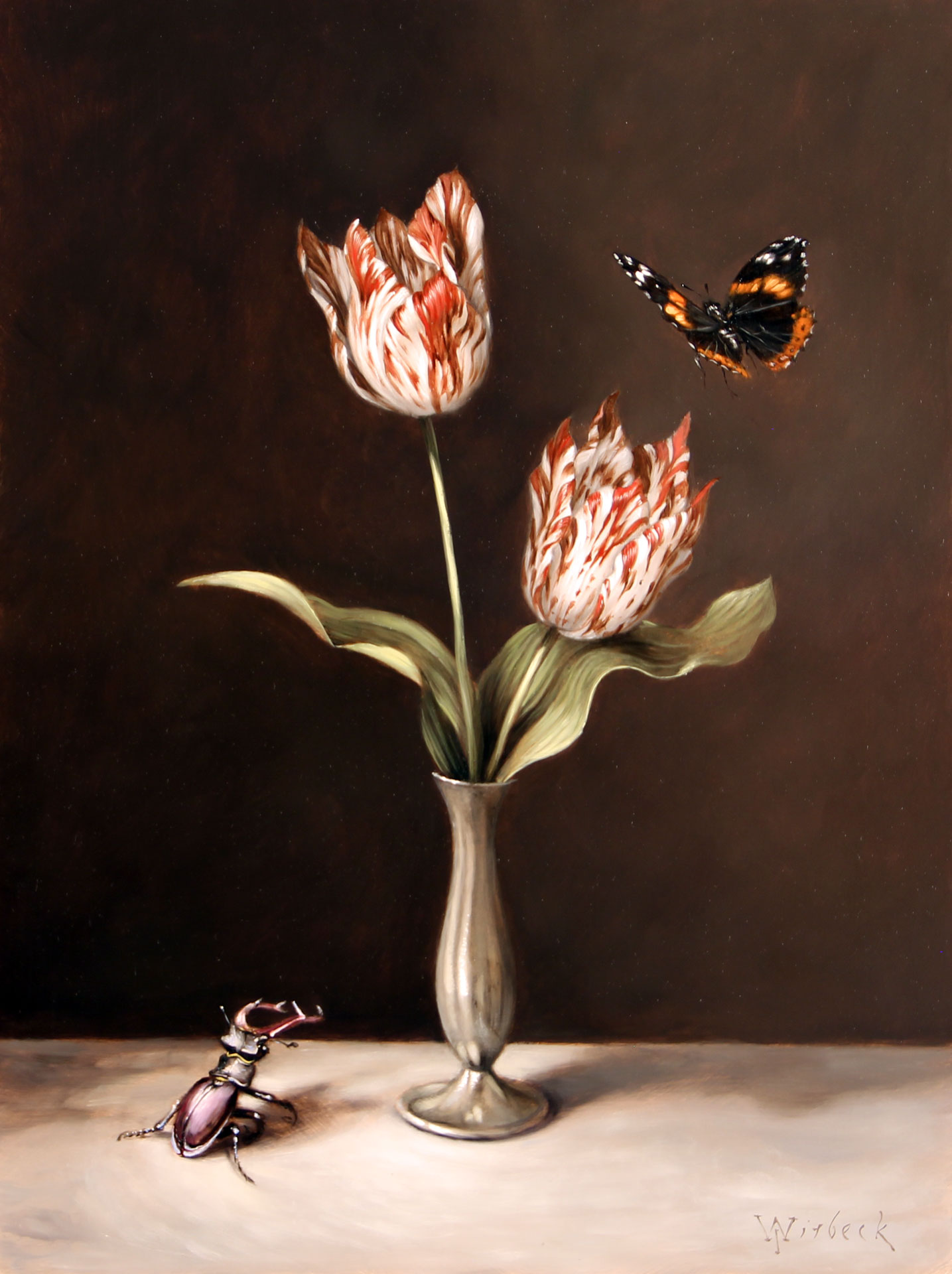
Stag Beetle with Tulips
16" x 12" oil on panel
The March art shows in Florida are coming up fast. Be sure to check my website for more information on each show and to visit their official websites. Keep an eye on my site too for the latest paintings and updates, I have a number of pieces nearing completion and ready to be varnished. You can also follow me on Instagram.
Happy New Year!
All my best,
James Whitbeck
(413) 695-3937
